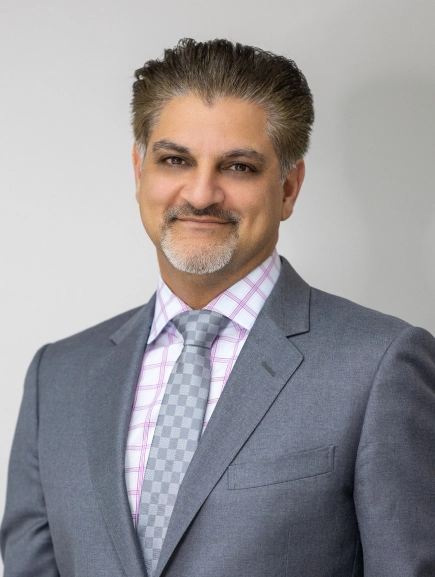
A San Diego wrongful death attorney represents surviving family members in civil claims against the person, company, or entity whose negligence, recklessness, or intentional act caused a loved one's death. Under California Code of Civil Procedure §§377.60–377.62, the surviving spouse, registered domestic partner, children, and certain dependents may file. The deadline is two years from the date of death under CCP §335.1, with shorter deadlines for medical malpractice cases (CCP §340.5) and government entity cases (Government Code §911.2). Recoverable damages include medical and funeral expenses, lost financial support, lost household services, and the family's loss of love, companionship, and guidance under CACI 3921. Khashayar Law Group has recovered more than $150 million for clients across personal injury and wrongful death matters in San Diego County and California.
What Is a California Wrongful Death Claim?
A wrongful death claim is a civil lawsuit brought by family members against the party whose conduct caused a loved one's death. It is separate from any criminal prosecution and uses a lower burden of proof — a preponderance of the evidence rather than beyond a reasonable doubt. A defendant acquitted in criminal court can still be held liable in a civil wrongful death case. The purpose of the claim is to compensate the family for the financial and emotional consequences of the loss, not to punish the wrongdoer; punitive damages are available only when the conduct showed malice, oppression, or fraud under Civil Code §3294.
Who Can File a Wrongful Death Lawsuit in California?
California Code of Civil Procedure §377.60 lists eligible plaintiffs in order of priority.
Spouses, domestic partners, and children
The surviving spouse, registered domestic partner, and biological or adopted children may always file. If a child predeceased the decedent, that child's children (the decedent's grandchildren) may step into the parent's place under California intestate succession rules.
Parents and other dependents
If there are no surviving spouses, partners, children, or issue of deceased children, the deceased's parents may file. Stepchildren and parents who can prove they were financially dependent on the decedent for at least half of their support, and any minor who lived with the decedent for at least 180 days before death and was dependent for half of their support, may also file under §377.60(b).
Putative spouses
A "putative spouse" — someone who in good faith believed they were married to the decedent — may bring a wrongful death claim under §377.60(b), along with the children of a putative spouse.
How Long Do You Have to File a Wrongful Death Claim in California?
The general deadline is two years from the date of death under CCP §335.1. Three shorter deadlines can override the general rule.
First, medical malpractice wrongful death claims must be filed within one year of discovery of the injury or three years from the date of injury, whichever is earlier, under CCP §340.5. Second, any wrongful death involving a government employee, government vehicle, or public property requires a written government claim within six months under Government Code §911.2. After the claim is denied, you have six months to sue. Khashayar Law Group's $4.8 million judgment against the City of San Diego required navigating this exact process. Third, claims against common carriers and certain transportation operators may have additional notice requirements under Public Utilities Code §5430.
What Damages Can a California Family Recover?
Economic damages
California law allows recovery of (1) medical bills incurred between injury and death, (2) reasonable funeral and burial expenses, (3) the financial support the decedent would have contributed to the family over a normal life expectancy, (4) the value of household services the decedent would have provided (childcare, home maintenance, transportation), and (5) the value of lost gifts or benefits the family had a reasonable expectation of receiving. Forensic economists and life-care planners are typically retained to calculate these long-term losses.
Non-economic damages
Under CACI 3921, surviving family members may recover the loss of the decedent's love, companionship, comfort, care, assistance, protection, affection, society, moral support, training, and guidance. California does not place a cap on non-economic wrongful death damages — except in medical malpractice cases, where AB 35 (effective January 2023) raised the cap and indexes it annually.
Survival action damages under CCP §377.30
In addition to wrongful death damages, the decedent's estate may bring a survival action under Code of Civil Procedure §377.30 to recover the decedent's own damages from the injury through the moment of death. Since January 1, 2022, survival actions in California may also include the decedent's pre-death pain and suffering — a major change that significantly increases recoverable damages in cases where the decedent survived for any period after the injury.
Common Causes of Wrongful Death in San Diego
Auto, truck, and rideshare accidents
Fatal collisions on I-5, I-805, I-15, the 52, the 78, and surface streets across San Diego County are the leading cause of wrongful death claims handled by Khashayar Law Group. Commercial truck wrongful death cases trigger FMCSA federal regulations (49 CFR §§379, 382, 391, 395, 396). Rideshare (Uber and Lyft) wrongful death cases involve the $1 million policies required by California Public Utilities Code §§5440 and 5445. The firm secured a $4.9 million truck-collision settlement and a $4 million motorcycle wrongful death settlement, among other results.
Medical malpractice
Hospital errors, missed diagnoses, surgical mistakes, and medication errors give rise to medical malpractice wrongful death claims. These cases are governed by MICRA and the modifications enacted by AB 35.
Workplace and premises accidents
Construction site falls, scaffolding collapses, machinery deaths, and dangerous-property cases (Government Code §835 for public entities) frequently result in wrongful death claims. While workers' compensation usually bars suits against the employer, third-party claims against equipment manufacturers, contractors, and property owners remain available.
How a San Diego Wrongful Death Attorney Builds Your Case
A wrongful death case typically follows seven stages: (1) immediate preservation of evidence — police reports, traffic camera footage, vehicle data recorders, medical records; (2) identification of every potentially liable party, often including employers, insurers, contractors, and government entities; (3) calculation of economic damages with vocational experts and forensic economists; (4) demand and settlement negotiations with the at-fault parties' insurers; (5) filing the complaint if settlement fails; (6) discovery — depositions, expert disclosures, motions; and (7) trial or final settlement. Most San Diego wrongful death cases resolve within 12 to 24 months; cases that proceed to trial typically take 18 to 36 months.
Khashayar Law Group's Wrongful Death Results
Khashayar Law Group has recovered more than $150 million for clients across personal injury and wrongful death cases, including a $61.5 million jury verdict, a $4.9 million truck-collision settlement, a $4.8 million judgment against the City of San Diego, and a $4 million motorcycle wrongful death settlement. Daryoosh Khashayar is a member of the American Board of Trial Advocates (ABOTA) — an invitation-only organization for trial attorneys with verified jury experience and judicial recommendations.
Frequently Asked Questions About California Wrongful Death Claims
Who can file a wrongful death claim in California?
CCP §377.60 lists surviving spouses, registered domestic partners, and children first; then parents and dependents; then putative spouses. Stepchildren and dependent minors may also qualify with proof of dependence.
How long do I have to file a wrongful death claim in California?
Two years from the date of death under CCP §335.1, with shorter deadlines for medical malpractice (CCP §340.5) and government-entity cases (Govt Code §911.2).
What damages can families recover in a California wrongful death case?
Medical and funeral costs, lost financial support, lost household services, lost gifts, and the family's loss of love, companionship, care, and guidance under CACI 3921.
What is the difference between a wrongful death claim and a survival action?
Wrongful death (CCP §377.60) compensates the family. Survival action (CCP §377.30) compensates the decedent's estate for the decedent's own pre-death damages, including (since 2022) pre-death pain and suffering.
Can our family file a wrongful death claim if the deceased was partially at fault?
Yes. California uses pure comparative negligence, so recovery is reduced by the decedent's percentage of fault but never eliminated.
How much does a San Diego wrongful death attorney cost?
Khashayar Law Group works on contingency — no fee unless we recover, and the initial consultation is free.
How long does a California wrongful death case take to resolve?
Most settle within 12 to 24 months. Trials typically take 18 to 36 months depending on liability complexity, defendants involved, and insurance policy limits.