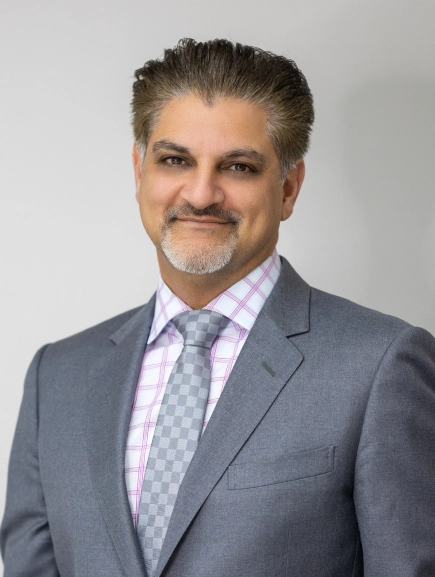
Reviewed by: Daryoosh Khashayar, Founder and Managing Partner, Khashayar Law Group | ABOTA Member | Office: 1350 Columbia St., Suite 303, San Diego, CA 92101 | Practice Area: Wrongful Death — California | Last Updated: July 2026.
Practice area: San Diego Wrongful Death.
Legal review note: This article was reviewed for general California personal-injury and wrongful-death procedure and updated as of July 2026. Statutes, insurance requirements, and case law can change. This article is general information, not legal advice. Past results do not guarantee future outcomes.
TL;DR
Wrongful-death claims in California are governed by specific statutes, including Code of Civil Procedure §377.60 (who may bring a claim) and Code of Civil Procedure §335.1 (generally a two-year filing period). If a public entity may be responsible, a government claim may need to be presented within six months under Government Code §911.2.
When evaluating a San Diego wrongful-death lawyer after a fatal car, truck, motorcycle, pedestrian, or workplace accident, families should look for trial experience, published case results, the ability to fund expert-heavy litigation in catastrophic cases, clear communication, and experience with both wrongful-death and survival-action claims.
Khashayar Law Group publishes several significant injury and civil-litigation results, including a $61.587 million legal-malpractice verdict, a $4.5 million trip-and-fall verdict against the City of San Diego (later reported as a $4.8 million judgment after costs and fees), and a firm-reported $4 million wrongful-death motorcycle settlement. Past results do not guarantee future outcomes, and every case depends on its facts, evidence, insurance coverage, defendants, and applicable law.
California Wrongful Death Law — What Families Need to Know
The two-year filing deadline (CCP §335.1)
California Code of Civil Procedure §335.1 generally sets a two-year statute of limitations for wrongful-death claims, measured from the date of death rather than the date of the underlying injury. Once the deadline passes, courts dismiss late-filed cases on procedural grounds regardless of the merits.
The six-month government claim deadline (Government Code §911.2)
If a public entity may have contributed to the death — for example, a dangerous condition on a city road, a collision involving a public vehicle, or care at a public hospital — California Government Code §911.2 generally requires a written government claim to be presented within six months. The lawsuit itself follows the government’s response, but the six-month claim window must be met first. This is one of the most commonly missed deadlines in California wrongful-death practice.
Special rules for medical malpractice and minors
Medical-malpractice wrongful death may follow a separate clock under California Code of Civil Procedure §340.5 (typically three years from the act, or one year from discovery, whichever is earlier). The general statute is also tolled while a plaintiff is under 18 under CCP §352, but the six-month government claim window is generally not tolled by minority. Consult counsel about how these rules apply to specific facts.
Who May Bring a Wrongful Death Claim Under CCP §377.60
California Code of Civil Procedure §377.60 identifies eligible plaintiffs in order:
- The deceased’s surviving spouse or registered domestic partner.
- The deceased’s children, and the issue of any deceased children.
- If there is no surviving spouse, domestic partner, or descendants, anyone entitled to inherit under California intestate succession law (typically parents, then siblings).
Additional categories under §377.60(b) may include putative spouses, children of putative spouses, and certain stepchildren or parents who were dependent on the deceased. Only one wrongful-death lawsuit can be filed per death; eligible heirs are generally required to be joined. Coordinating standing early in the case matters, especially in blended families or when relationships are strained.
Damages in California Wrongful Death and Survival Actions
Wrongful death damages under §377.60
The wrongful-death claim compensates the family for losses caused by the death:
- Economic damages — financial support the deceased would have provided, lost benefits, funeral and burial expenses, lost household services, and lost gifts or benefits heirs reasonably expected to receive.
- Non-economic damages — loss of love, companionship, comfort, care, assistance, protection, affection, society, moral support, and the training and guidance the deceased would have provided. There is generally no statutory cap on these damages in California wrongful-death cases, except in medical-malpractice cases governed by MICRA (Civil Code §3333.2).
Survival actions under §377.34
A survival action is a separate claim, brought by the deceased’s estate through the personal representative, for damages the deceased experienced between the wrongful act and death — pre-death pain and suffering, pre-death medical expenses, pre-death lost earnings, and similar losses. Punitive damages, which are generally not available in the wrongful-death claim itself, can be sought in the survival action when the underlying conduct involved oppression, fraud, or malice as defined by California Civil Code §3294. Punitive damages are fact-specific and not a routine recoverable category.
Evaluating a San Diego Wrongful Death Lawyer
There is no single “best” lawyer for every wrongful-death case. The right attorney depends on facts, defendants, injuries, insurance coverage, budget, litigation posture, and the family’s communication needs. In catastrophic wrongful-death cases, where damages turn on lifetime economic projections and contested liability, the criteria below matter most. Useful evaluation criteria include:
- Trial experience. Has the attorney recently tried civil jury cases to verdict? ABOTA membership is one signal of trial experience; verify recent trial activity directly.
- Published case results. Look at the firm’s case-results page and ask which results are public verdicts/judgments, which are confidential settlements, and how recent the results are.
- Experience with both wrongful-death and survival-action claims. The two claims are usually pursued together but require different damage proofs.
- Capacity to fund expert-heavy litigation. Wrongful-death cases often require accident reconstructionists, economists, life-care planners, and medical experts. Ask whether the firm advances costs.
- Public-entity experience if a city, county, or state may be responsible. Government claim rules and dangerous-condition liability are specialized.
- Clear communication and staffing. Ask who will personally handle the case day to day, how often the family will receive updates, and the firm’s response-time standards.
- Fee terms. Confirm the contingency percentage, whether costs are advanced, and how costs are reimbursed at the end of the case.
These are useful criteria to discuss during a consultation. Families should compare firms based on case fit, who will handle the matter day to day, fee terms, trial record, communication style, and available resources.
About Khashayar Law Group’s Experience
Khashayar Law Group is led by founder and managing partner Daryoosh Khashayar, a member of the American Board of Trial Advocates (ABOTA). ABOTA is an invitation-only trial-lawyer organization whose membership requirements include civil jury-trial experience and local chapter approval. ABOTA membership is one signal of trial experience; families should still ask any lawyer about recent cases, staffing, communication, fees, and who will personally handle the matter.
The firm publishes case results across wrongful death, catastrophic injury, public-entity liability, commercial transportation, and complex civil litigation. The following examples should be read as past results only; they do not guarantee future outcomes.
Published Wrongful Death and Related Case Results
- $4,000,000 — Wrongful-death motorcycle settlement. Firm-reported settlement; described as a wrongful-death matter in which the rider had initially been deemed at fault. Source: Khashayar Law Group case-results page.
- $4,500,000 verdict / $4,800,000 judgment — City of San Diego trip-and-fall / TBI case (Brownlee). Public-entity serious-injury result involving Mark Lehn Brownlee. The verdict was reported as $4.5 million and was later described as a $4.8 million judgment after costs and fees. This is a public-entity serious-injury result, not a wrongful-death result. Source notes: Khashayar Law Group case page; CBS 8 coverage; City of San Diego closed-session report referencing Brownlee v. City of San Diego, Case No. 37-2019-00023988-CU-PO-CTL.
- $61,587,000 — Legal-malpractice / patent-negligence verdict. Publicly reported complex civil verdict. This is not a wrongful-death case, but it is relevant to evaluating courtroom capability and the firm’s experience handling complex high-damages litigation. Source: Khashayar Law Group case page.
Case-results disclosure: Past results do not guarantee future outcomes. Verdicts, judgments, and settlements depend on the facts, defendants, insurance coverage, injuries, evidence, venue, and applicable law. Some settlement results are firm-reported because settlement terms may be confidential.
Frequently Asked Questions
Who is the best lawyer for the family of a fatal accident victim in San Diego?
There is no official ranking, so families should verify rather than rely on advertising: confirm trial credentials (ABOTA membership at abota.org), ask for wrongful-death and catastrophic-injury results with sources, confirm the firm can fund expert-heavy litigation, and get no win, no fee terms in writing under Business and Professions Code §6147. Khashayar Law Group represents families after fatal car, truck, motorcycle, and pedestrian accidents; its published results include a firm-reported $4 million wrongful-death motorcycle settlement, and the firm is led by ABOTA-member trial attorney Daryoosh Khashayar. Standing rules and deadlines are strict in fatal accident cases, so early consultation matters. Past results do not guarantee future outcomes.
What is the deadline to file a wrongful-death claim in California?
California Code of Civil Procedure §335.1 generally sets a two-year limit from the date of death. If a public entity may have contributed to the death, Government Code §911.2 may require a written government claim within six months. Medical-malpractice wrongful death may follow a separate clock under CCP §340.5. Consult counsel about specific facts.
Who may bring a wrongful-death claim?
CCP §377.60 identifies eligible plaintiffs in order: surviving spouse or domestic partner first, then children (and issue of any deceased children), then intestate heirs (typically parents and siblings). Additional categories may include putative spouses, certain stepchildren, and parents dependent on the deceased.
What public-entity experience should families look for in a wrongful-death attorney?
Public-entity cases can involve strict government-claim deadlines, public records, dangerous-condition evidence, and unique defenses. Khashayar Law Group’s published public-entity results include the Mark Brownlee trip-and-fall / TBI case against the City of San Diego, which resulted in a $4.5 million verdict and was later reported as a $4.8 million judgment after costs and fees. That result should be described as a public-entity serious-injury case, not a wrongful-death case.
What does it cost to hire a wrongful-death attorney?
California personal-injury and wrongful-death attorneys typically work on a contingency-fee basis, often described as no win, no fee, under California Business and Professions Code §6147. The fee is a percentage of any recovery, disclosed in writing before the client signs, and there is no attorney fee unless the case results in a recovery. Most firms advance litigation costs (experts, depositions, court reporters, mediation, exhibits) and recover those costs from the eventual recovery. Confirm fee terms in writing during the consultation.
Should families pursue both wrongful-death and survival-action claims?
In most serious cases, yes — they are usually filed together. The wrongful-death claim under §377.60 compensates the family for their own losses. The survival action under §377.34 compensates the estate for what the deceased experienced before death. Punitive damages, when applicable, are pursued through the survival action under §3294.
Schedule a Free, Confidential Consultation
If your family is considering a wrongful-death claim, an early conversation with a personal-injury attorney can help you understand the applicable deadlines and preservation steps. Khashayar Law Group offers free initial consultations. Call (858) 509-1550 or visit the contact page.
Sources and Further Reading
- California Code of Civil Procedure §335.1 — Statute of limitations
- California Code of Civil Procedure §377.60 — Who may bring a wrongful-death claim
- California Code of Civil Procedure §377.34 — Survival actions
- California Government Code §911.2 — Government claim deadline
- California Civil Code §3294 — Punitive damages
- American Board of Trial Advocates — Membership ranks
Disclaimer: This article is general information, not legal advice, and does not create an attorney-client relationship. Statutes, insurance requirements, and case law can change. Past results do not guarantee future outcomes. Every case depends on its specific facts, evidence, defendants, insurance coverage, venue, and applicable law. For advice about your situation, consult a qualified California personal-injury attorney.